Client Context
The client, Re-tech, is an eCommerce store focused on consumer electronics, primarily Apple products. Meta Ads represented a key acquisition channel, but campaign performance was limited by technical and data-related issues rather than media buying itself.
The main goal of the project was clear: unlock Meta Ads performance by fixing feed and account structure issues without increasing ad spend.
Initial Challenges
Before any optimization took place, Meta Ads performance was constrained by several feed- and account-level limitations.
Poor product feed quality
The product feed showed several structural and data-quality issues, including:
- Missing or incomplete attributes (GTIN, brand, color, size)
- Inconsistent product titles and descriptions
- Incorrect or mismatched product categories
Impact on campaign performance
These feed-related issues led to performance limitations:
- Frequent ad disapprovals
- Limited delivery across campaigns
- Low ROAS despite stable ad spend
Re-tech Account Setup (What We Focused On)
Instead of starting with creatives or budgets, we focused on fixing the technical and data foundation first.
In parallel, we reviewed the Meta Ads account structure to ensure it could properly leverage the cleaned feed data:
- Checked catalog integration and data mapping
- Ensured consistency between feed attributes and campaign logic
- Removed structural limitations that prevented stable scaling
Feed & Data Foundation
The core of the Re-tech setup was a full feed audit and restructuring using Mergado. We also corrected missing and invalid attributes, including:
Subsequently we standardized product taxonomy and categories according to Meta best practices and rebuilt product titles and descriptions to:
- Improve relevance
- Reduce mismatches
- Increase delivery consistency
Account Stability
To ensure long-term reliability, we implemented automated daily feed synchronization between Mergado and Meta. This guaranteed consistent updates for:
- Pricing
- Availability
- Promotions
The result was a clean, scalable foundation ready for further ad optimization.
Feed-Driven Ad Enhancements
Once the feed foundation was fixed, we enhanced ads through feed-based improvements. These changes were designed to improve:
- CTR
- Engagement
- Purchase intent
As part of this step, we:
- Added pricing and promotional elements directly into product images using Feed Image Editor, a Mergado extension for creating dynamic creatives from product images
- Improved visual consistency across catalog ads
- Enabled better segmentation opportunities based on cleaned feed data
Results (After Optimization)
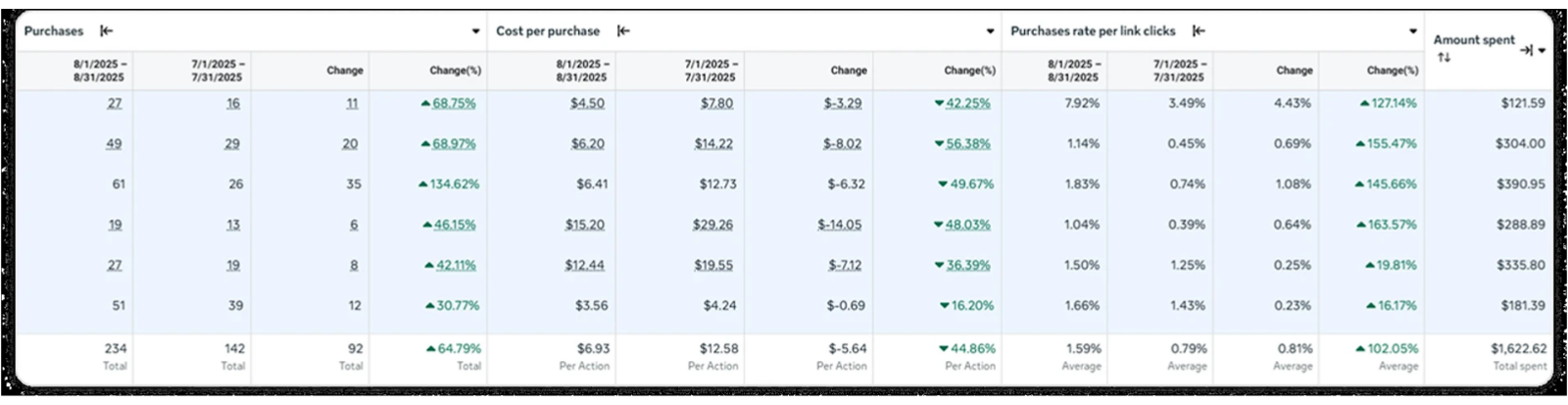
After the Re-tech setup and feed optimization, Meta Ads performance improved significantly without increasing ad spend.
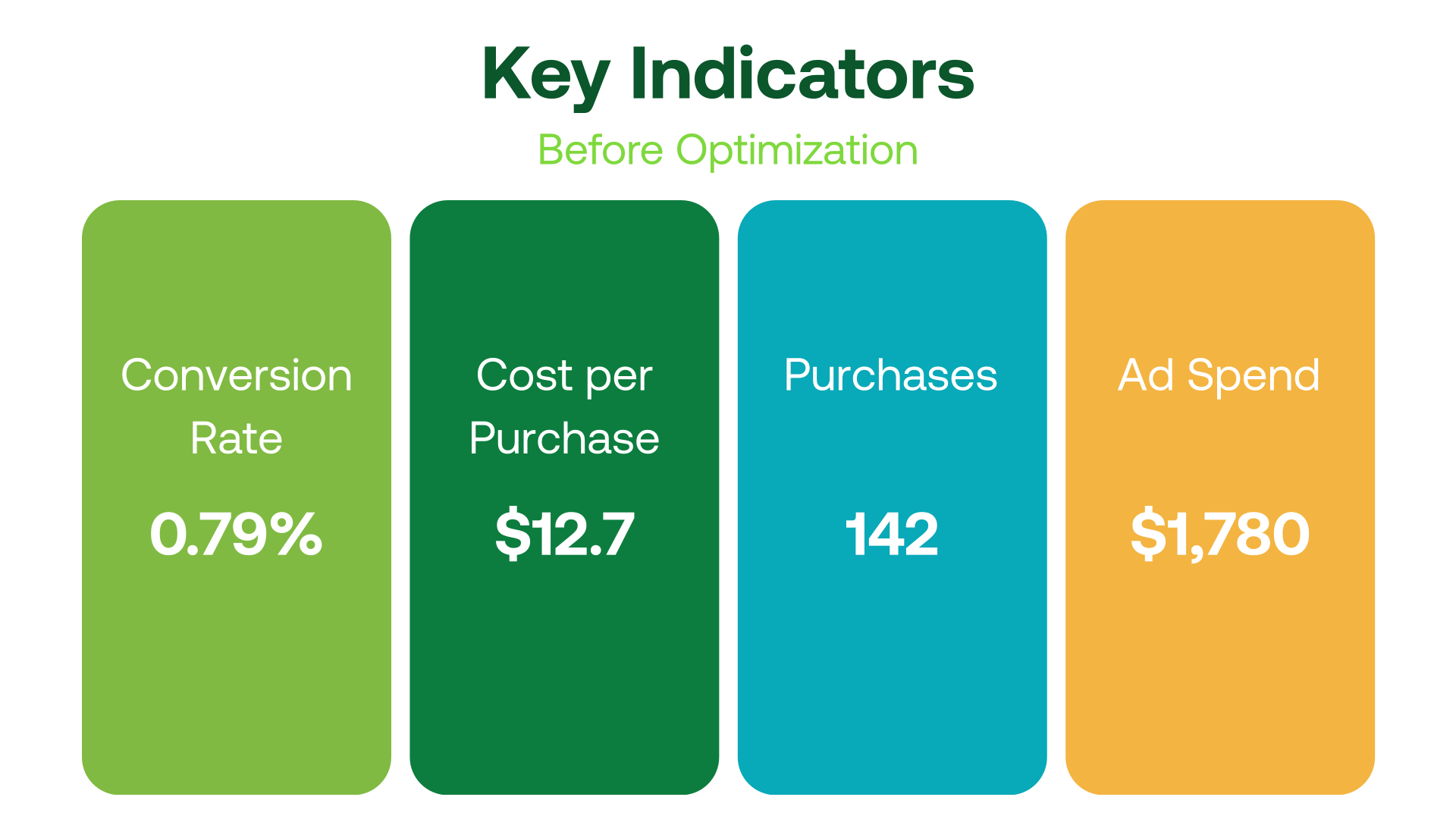
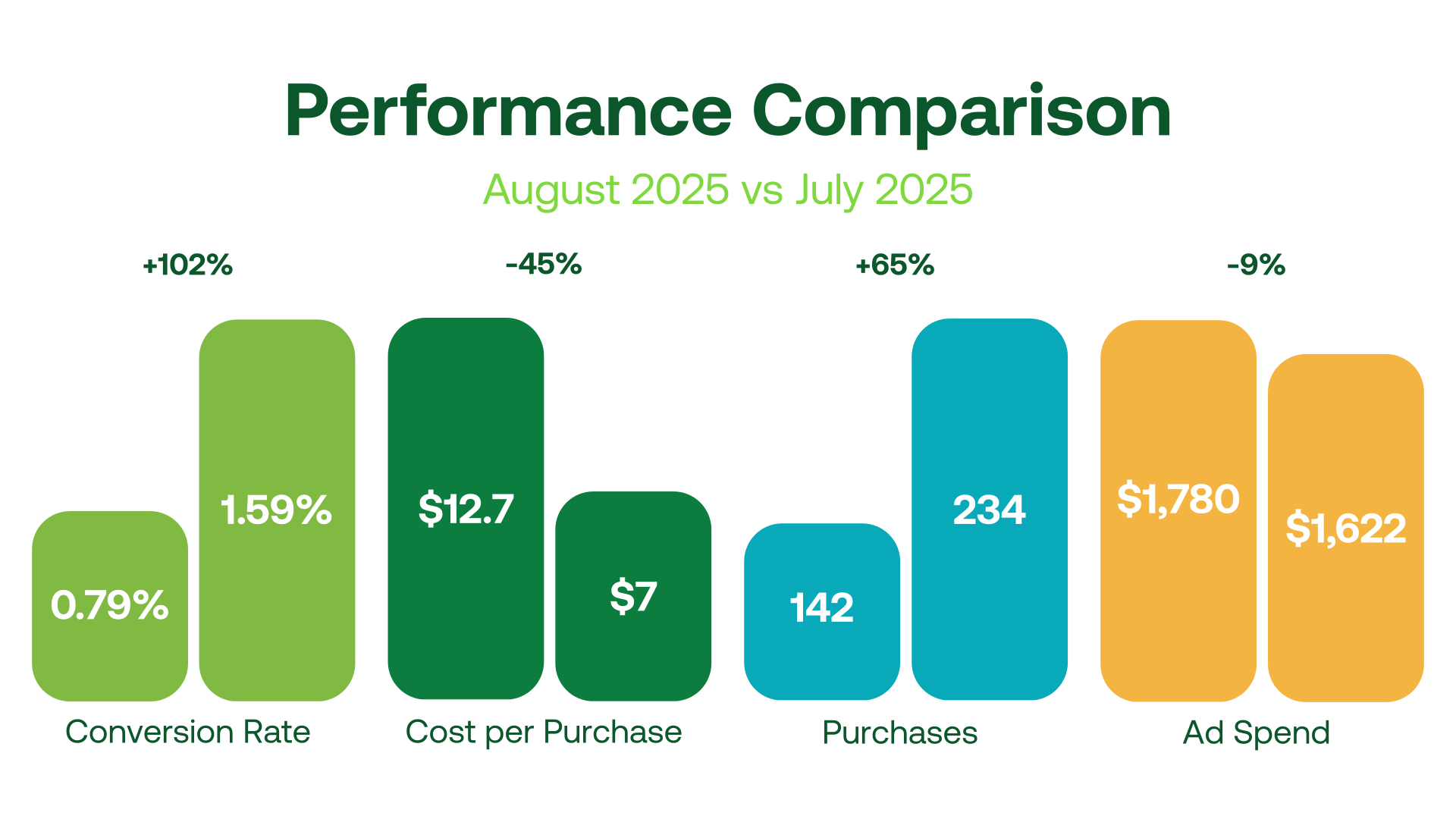
Performance Comparison (Aug ’25 vs Jul ’25)
- Conversion Rate: 0.79% → 1.59% (+102%)
- Cost per Purchase: $12.7 → $7 (–45%)
- Purchases: 142 → 234 (+65%)
- Ad Spend: $1,780 → $1,622 (–9%)
The performance uplift was driven primarily by data quality and feed structure, not by aggressive media or budget changes. The month-over-month comparison highlights the immediate impact of the Re-tech setup.
Key Takeaways
- Feed quality is a scaling bottleneck for Meta Ads.
- Account setup should come before creative or budget scaling.
- Clean, structured product data enables:
- Better delivery
- Higher efficiency
- Predictable growth
This case demonstrates how feed optimization can directly impact Meta Ads performance when implemented as part of a broader technical strategy.