


10 Tips for Surviving Among Wolves (Hyper-Competitive E‑commerce)

Starting with dynamic pricing in a segment where every crown counts? Forget the idea that the goal is to be the cheapest. The goal is to profit.
Here’s a distilled list of the most important things you need to know so you don’t burn through your margin right at the start.
1. Don’t leave money on the table (the “second place” rule)
Dynamic pricing isn’t just about lowering prices. If you’re the cheapest on Heureka by CZK 50, you’re giving up profit for no reason.
- Tip: Set your automation to raise your price so it sits just below the second-cheapest competitor. You’ll still stay in the top position, but with a higher margin.
2. Use the “empty shelf” effect
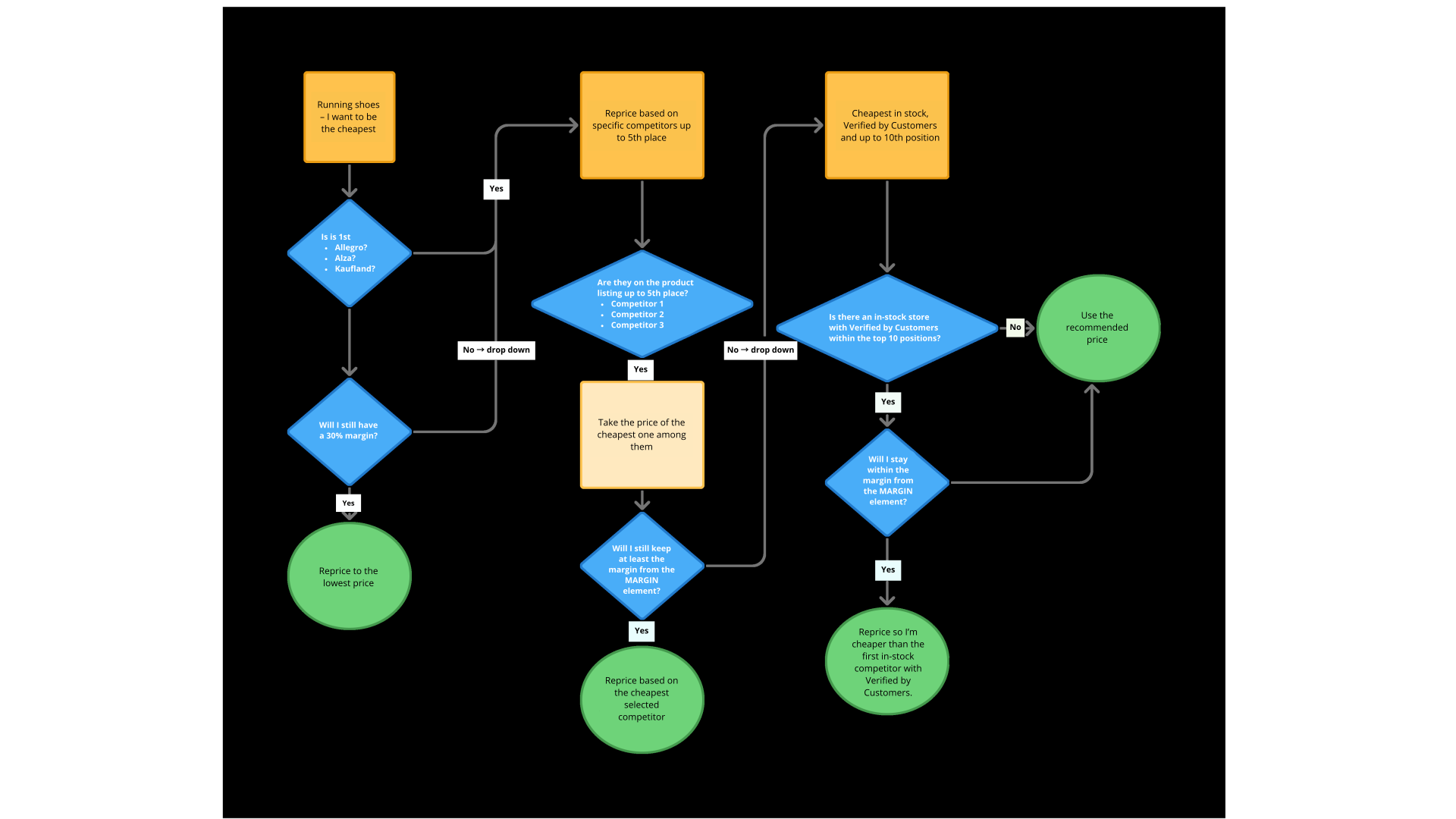
This is the simplest way to boost margin. If your data shows the cheapest competitors are out of stock, raise your price immediately.
- Tip: At that moment, the customer has fewer options and will often buy even at your higher price. Once competitors restock, your automation can move you back into line again.
3. Protect your floor price
Never let an automation run wild without a minimum selling price.
- Watch out: Your limit price isn’t just your purchase cost. It also needs to cover shipping, packaging, marketing costs and still leave you at least a minimal margin. Otherwise, you’re generating revenue while burning cash.
4. Sacrifice margin on hero product, make profit in the basket
Don’t try to keep high margins on everything. In a truly competitive market, that doesn’t work.
- Traffic drivers: On the most searched products (bestsellers), you can price aggressively – even at the edge. These products act as bait that gets customers onto your online store.
- Profitable add-ons: Real profit is made on what customers add to their cart alongside the main product – accessories, services, and complementary products where competition is less intense and you can maintain a healthy margin.
5. “Baťa pricing” still works
The human brain reads from left to right. CZK 1,999 simply feels much better than CZK 2,000.
- Tip: Set rounding rules to end prices in .99 or .90. If you want to look less “discounty,” .50 can work well too.
6. Segment, don’t apply a blanket strategy
Using one strategy across your entire online store is a fast track to trouble.
- Split your assortment: New launches need a different approach than slow movers you want to clear from the warehouse. Seasonal goods (skis in December) can carry different margins than year-round bestsellers.
7. Avoid the Goliaths
Keep an eye on Auction Insights / overlap rate in Google Ads. If giants like Temu, Allegro, or Alza are crushing you in auctions – and you can’t compete on price or service – pull back.
- Tip: Look for niches and segments where these giants aren’t as dominant, and focus your budget there.
8. Actively lower your pricing “floor” (negotiate!)
A better purchase price gives you more room to maneuver with automated pricing. Don’t settle for last year’s contract terms.
- The “every year” rule: Reach out to suppliers at least once a year. Relationships shift, and what wasn’t possible last year may be possible now. Ask directly: “What would it take for me to get better pricing?”
- Leverage sympathy and brand: Don’t have massive volumes? That’s okay. Sometimes you can win better terms simply because the supplier likes working with you or because being associated with your brand has prestige. Sell them on your story and image.
- The “volume now, benefits later” tactic: Show your strength. For example, in peak season (e.g., skis in December), drop prices to drive high sales volume. Yes, you reduce short-term profit, but you gain a strong argument to negotiate better purchase prices for the entire next year.
9. Garbage in, garbage out (data is oil)
Your automation is only as smart as the data you feed it.
- Risk: A product that’s incorrectly matched on a comparison site (name, category) can make you reprice against a completely different (and cheaper) item. Regularly check match quality.
- Sources: Mine data from Google Merchant Center, the Heureka Assortment Report, or Allegro Analytics. If you don’t have access, contact the support teams of the platforms you advertise on. They’ll often help if you have meaningful spend.
10. The psychology of price increases (FOMO)
With premium brands and true love brands, you don’t have to compete only by discounting.
- Tip: Gradual, visible price increases can trigger FOMO (Fear Of Missing Out). Customers may buy faster to avoid paying even more tomorrow.

- Get a clear view of market prices, automate your pricing, and save dozens of hours of manual work.
- Try it free for 30 days.
Vito Nikolič
Vito Nikolič is the CMO of Mergado, a product data management tool for online stores, where he has led marketing since 2019. He works across performance marketing, brand marketing, and AI visibility: how products show up in answers from AI assistants. On the side, he works in music-industry marketing. Find him on LinkedIn.